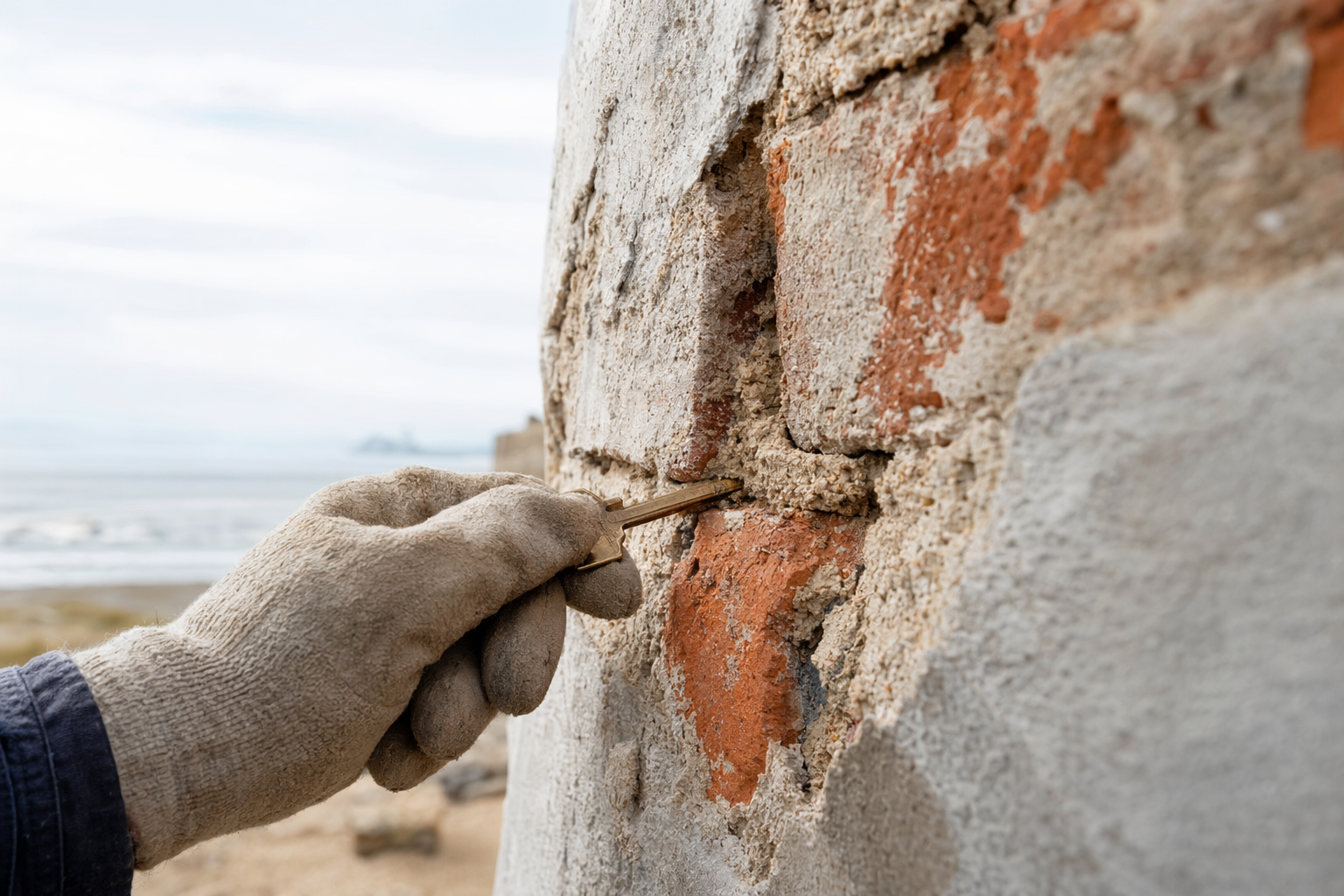
Loose, cracked, or crumbling mortar and damaged brick can start as a small repair, but water usually makes it worse if you ignore it.
The short answer
Look first for three things: missing mortar, damaged brick faces, and signs of water. If the joints are powdery or falling out, the brick surface is popping off or flaking, or you see leaks and movement around openings, the wall or chimney should be checked by a licensed, insured mason.
Some issues are mostly cosmetic at first. A little surface hairline cracking in mortar, light efflorescence, or one isolated chipped brick may not mean the wall is failing. But widespread crumbling joints, deep cracks that follow mortar lines, bulging areas, rust stains near lintels, or repeated moisture problems are more urgent.
A good rule is simple: if water can get in, damage can spread. Mortar joints are meant to shed water and help the masonry work as a system with flashing, weep holes, and support pieces like steel lintels. When one part starts failing, nearby brick often follows.
Stoneform is a free education and matching service. We can help you understand common signs and get matched with vetted local masonry specialists, but the mason you hire should inspect the actual conditions and you should verify licenses and insurance yourself.
What to look for
Start with the mortar joints. Healthy mortar is firm and intact. Failing mortar may look recessed, cracked, sandy, soft, or missing in spots. You may be able to scrape loose grains out with a finger or key. On older homes, this often means repointing is needed before water gets deeper into the wall. Learn more about repointing and tuckpointing.
Then check the brick itself. Spalling means the face of the brick is flaking, peeling, or popping off. That usually points to moisture getting into the masonry and then freezing, or to hard modern mortar trapping moisture in older brick. One or two damaged units can sometimes be replaced. Widespread spalling often means the moisture source also needs attention.
Look at cracks carefully. Thin shrinkage cracks in mortar can be minor. Stair-step cracks that run along mortar joints, cracks that widen over time, separated corners, or cracks above doors and windows deserve faster attention. Also check for rust stains, sagging, or cracking over openings, which can signal trouble with a steel lintel. If the support above an opening is failing, that is not just a cosmetic issue.
Watch for moisture clues. Efflorescence is the white, chalky deposit left when water moves through masonry and evaporates. By itself, it is not structural damage, but it is evidence that moisture is traveling through the wall. Also look for dark damp patches, musty smells indoors, peeling paint on nearby trim, chimney leaks, deteriorated chimney crowns, blocked weep holes, missing flashing, and mortar damage near grade where sprinklers or splashback keep the wall wet.
Retaining walls and chimneys have their own warning signs. On a segmental retaining-wall block wall, leaning, separation, or soil washing out behind the wall can mean drainage problems. On a chimney, spalling brick, open mortar joints, cracked crowns, and damaged flashing often let water in quickly because the stack is exposed on all sides. You can browse related services and guides if you are not sure what kind of mason to call.
Common mistakes
One common mistake is treating symptoms instead of the water source. Homeowners sometimes scrub off efflorescence, patch a crack, or paint over damp masonry without fixing the reason moisture is getting in. If flashing is missing, weep holes are blocked, the chimney crown is cracked, or grading sends water toward the wall, the damage usually comes back.
Another mistake is using the wrong repair materials. Very hard mortar or smear-on patch products can make things worse, especially on older brick. Masonry repairs work best when the mortar type, joint profile, and replacement brick are suited to the building. Bad repointing can trap moisture, accelerate spalling, and leave the wall looking patched.
Homeowners also sometimes wait too long because the problem looks small. A few open joints can seem minor, but freeze-thaw cycles can quickly enlarge the damaged area. The same goes for rusting lintels, loose chimney mortar, and bulging sections of brick. Early repairs are often more limited than delayed repairs.
The last mistake is hiring based only on the lowest number. Masonry pricing depends on access, height, brick matching, setup, cleanup, and how much hidden damage is found after loose material is removed. If you want a sense of typical ranges before talking to a pro, see costs. Stoneform does not provide quotes or perform the work. We help homeowners connect with local licensed, insured masons and compare options.
Next steps
First, document what you see. Take clear photos of all sides, close-ups of cracks and joints, and wider shots that show doors, windows, corners, chimneys, or retaining walls nearby. Note whether the damage changes after heavy rain or winter weather. This gives the mason useful context.
Second, do a basic triage. More urgent signs include bulging brick, loose pieces that could fall, widening stair-step cracks, movement around windows or doors, heavy chimney deterioration, or rusting and cracking above openings. In those cases, schedule an in-person masonry inspection soon and keep people away from any area with falling material.
Third, plan for the right kind of repair. Typical solutions may include repointing deteriorated joints, selective brick replacement, chimney crown repair, flashing repair, lintel replacement, or drainage corrections so the masonry can dry properly. The right fix depends on the cause, not just the visible damage.
If you want help finding the right pro, Stoneform is a free matching service for homeowners. Tell us about the problem and your location, and we can help you get matched with vetted local masonry specialists. You can also review how to choose a mason before hiring, and always verify licensing, insurance, and scope directly with the company you choose.