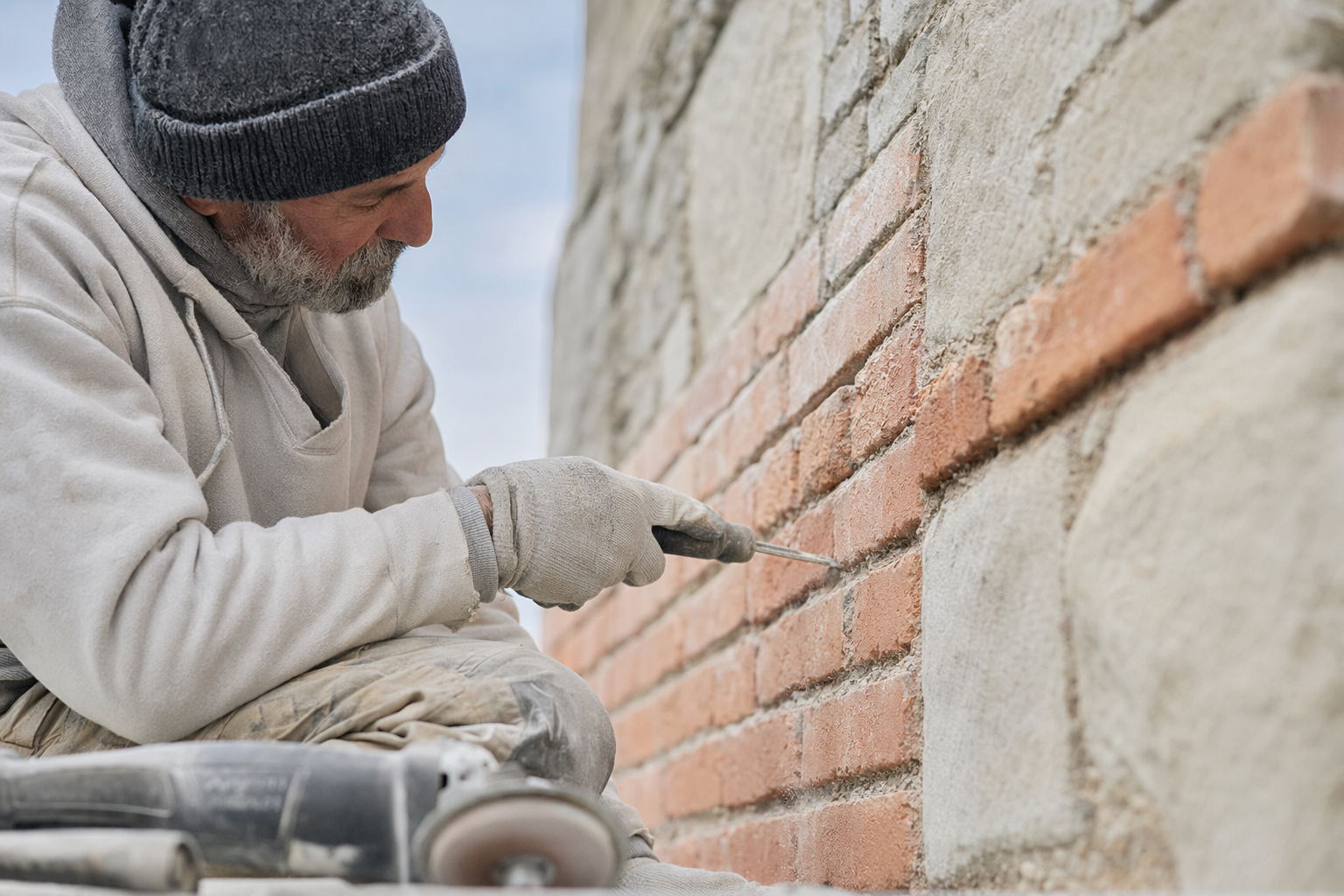
If the mortar between your bricks or stones is cracking, crumbling, or falling out, repointing may be the fix.
The short answer
Mortar joints are the sacrificial part of a masonry wall. In many homes, the brick or stone lasts much longer than the mortar, so the joints wear out first from rain, freeze-thaw cycles, sun exposure, and age. Repointing means carefully taking out that failing mortar and packing in new mortar that matches the original in strength, color, and profile.
This is not the same as smearing fresh mortar over old joints. Proper repointing removes deteriorated material to a consistent depth, cleans the joint, and installs compatible mortar in layers so it bonds and cures correctly. The goal is to keep water out while letting the wall breathe.
When done well, repointing can help protect chimneys, foundations, garden walls, and brick facades. When done poorly, it can trap moisture, damage brick faces, and lead to more spalling, staining, and repairs. If you are comparing options, see repointing and tuckpointing services or get matched with local licensed, insured masons.
What to look for
The most common sign is mortar that looks recessed, sandy, cracked, or missing. You may see small gaps between bricks, powdery material at the base of the wall, or joints that can be scraped out easily with a key or screwdriver. On chimneys, deterioration often shows up first on the weather side and near the crown.
Watch for moisture clues too. Efflorescence, which looks like a white chalky deposit, can mean water is moving through the wall. Spalling, where brick faces flake or pop off, can happen when moisture gets trapped and freezes. Damp interior walls, peeling paint near masonry, or leaks around a chimney can point to failed joints, flashing issues, or both.
Not every crack means repointing alone will solve it. Step cracks, bulging walls, loose stones, rusting steel lintels over windows, clogged weep holes, or movement around openings may mean there is a bigger water or structural issue. Stoneform is a free education and matching service, not a contractor, so we do not diagnose structures or give engineering advice. A qualified mason can inspect the joints and tell you whether repointing is appropriate or whether another repair should come first.
Good candidates for repointing often have worn joints but mostly sound brick or stone. If many units are broken, heavily spalled, or loose, the job may also include selective brick replacement, rebuilding sections, chimney crown work, or flashing repairs. For background on typical pricing, visit costs.
Common mistakes
One major mistake is using the wrong mortar. Older homes often need a softer, more breathable mortar than many modern mixes. If the new mortar is too hard, the brick or stone can take the stress instead of the joint. That can cause cracking and surface failure over time.
Another problem is shallow or messy prep. If a contractor only grinds out the face of the joint and leaves weak material behind, the new mortar may not hold. Overcutting with power tools can also widen joints or chip the arrises, the sharp edges of the brick. On stone work, poor tooling can leave joints looking smeared or unnatural.
Appearance matters, but function matters more. Matching color is important, yet joint profile and compaction are just as critical. Concave, flush, grapevine, and other finishes affect how water sheds and how the wall looks. Mortar should be packed tightly in lifts, then tooled at the right time. Too much water during mixing or cleanup can weaken the finish and stain the wall.
A final mistake is treating repointing as the only repair when water is entering from somewhere else. Failed chimney crowns, bad flashing, open coping joints, missing sealant at transitions, or drainage issues behind segmental retaining-wall block can keep feeding moisture into masonry. A good mason should explain what repointing will fix and what it will not.
Next steps
Start by walking the exterior and taking clear photos of problem areas. Note where you see cracking, missing mortar, spalling, staining, interior dampness, or chimney leaks. If possible, record when the issue seems worse, such as after heavy rain or winter freeze-thaw periods. This helps a mason understand whether the problem is isolated or part of a larger moisture pattern.
Then talk with a licensed, insured masonry specialist. Ask whether they will remove mortar to the proper depth, how they plan to match the mortar, what joint profile they recommend, and whether they see related issues like flashing defects, damaged lintels, blocked weep holes, or brick that should be replaced. You can also ask how they will protect windows, landscaping, and walkways from dust and debris during grinding and cleanup.
Helpful questions to ask:
- Will you test or assess the existing mortar before choosing the new mix?
- How much of the joint will be removed before repointing?
- Will any bricks or stones need replacement?
- What moisture source, if any, is causing the joints to fail?
- Who will perform the work, and are they licensed and insured?
Stoneform is a free service that helps homeowners understand masonry work and get matched with vetted local pros. We do not perform masonry work or provide construction, structural, or legal advice. If you want help finding a contractor for repointing, chimney joints, foundation mortar repair, or related masonry work, get matched or browse services and how to choose a mason.