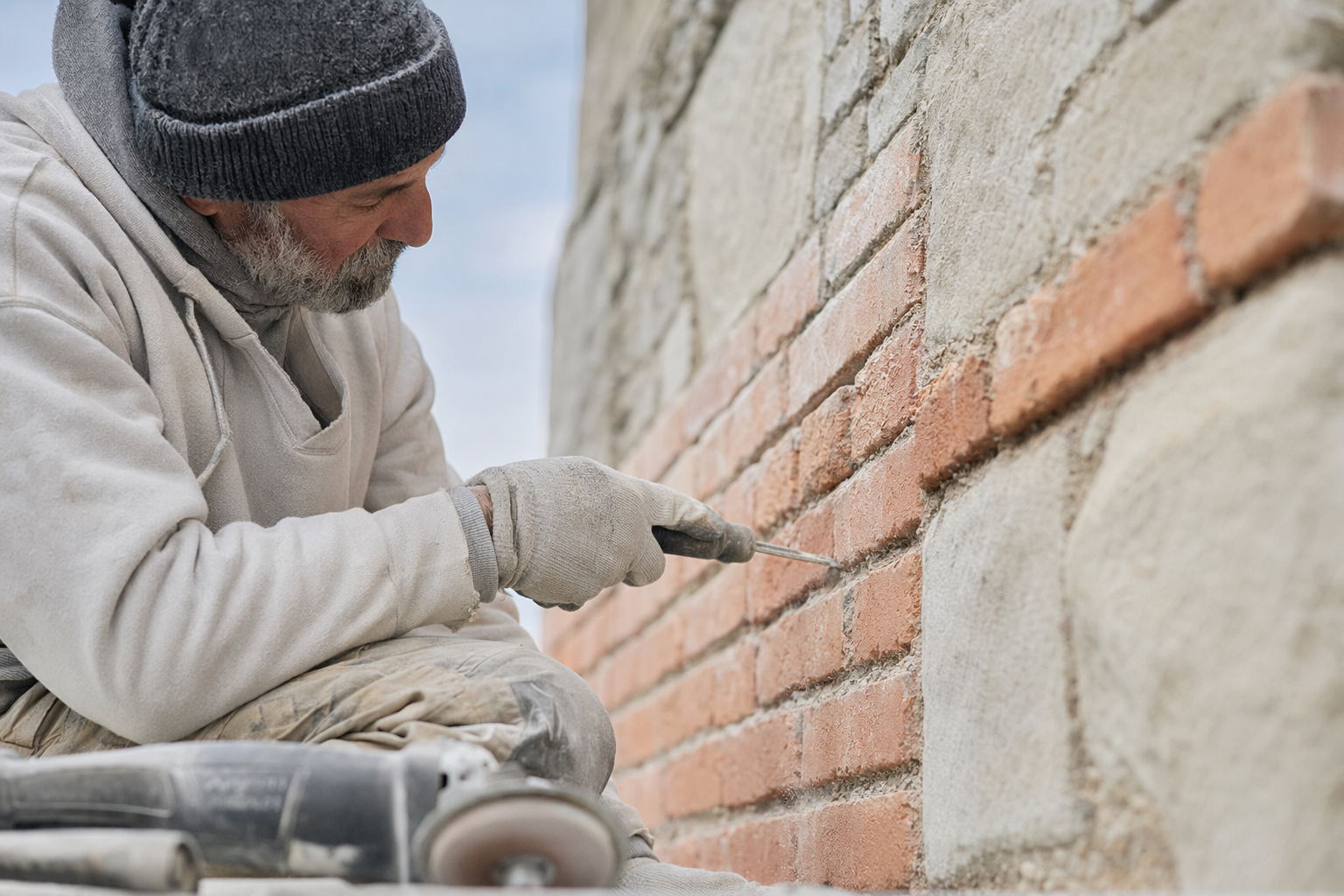
This work removes bad mortar between bricks or stones and replaces it with new mortar that fits the wall.
What this work involves
Repointing means carefully removing deteriorated mortar from the joints between brick or stone and installing new mortar. The goal is to restore the wall's weather resistance and help protect nearby masonry units from water getting in through open joints. Good repointing is precise work. The old mortar is cut out to the proper depth, the joints are cleaned, and the new mortar is packed in so it bonds well and cures properly.
Tuckpointing is often used as a general term for mortar-joint repair, but it can also refer to a more decorative finish where the mason shapes or colors the mortar to create a crisp, uniform joint appearance. On older homes, matching the original joint profile, mortar color, and mortar hardness matters. Mortar that is too hard for the existing brick can lead to cracking or spalling, especially in freeze-thaw weather.
A proper scope may also include replacing a few damaged bricks or stones, addressing efflorescence, checking flashing and weep holes, and sealing gaps around nearby openings if needed. If the problem is around a chimney, parapet, or window lintel, the mason may recommend related repairs so the new joints are not being asked to solve a bigger water issue by themselves.
This is not the same as smearing mortar over the surface. Surface patching can fail quickly if the loose material underneath is still there. A qualified mason should explain what areas need true joint removal and replacement and what finish will best match the rest of the wall. You can learn more about related masonry work at services and typical pricing at costs.
Signs you need it
The most common sign is mortar that looks cracked, recessed, sandy, loose, or missing in spots. You may notice small gaps in horizontal bed joints or vertical head joints, especially on walls that get heavy rain or strong sun. In some homes, the joints look visibly washed out while the brick still seems mostly intact.
Water clues matter too. White powdery efflorescence, damp interior walls, peeling paint near masonry, or repeated leaks around chimneys can all point to mortar joints that are no longer keeping water out well. In winter climates, trapped moisture can lead to spalling, where the face of the brick flakes or pops off.
Look closely at areas above windows and doors, near the top of walls, around chimney crowns, and under roof edges where flashing problems may send extra water into the masonry. Rust stains, stepped cracking, or movement near a steel lintel can mean there is more going on than simple joint wear. Repointing may still be part of the fix, but the mason should inspect the surrounding conditions too.
A small amount of hairline cracking does not always mean a whole wall needs repointing. Often, only certain elevations or exposed sections need repair. The key is catching failing joints before moisture damage spreads. If you are unsure whether you need spot repairs or broader work, Stoneform can help you get matched with local masons for an informed assessment through get matched.
What it typically costs
Repointing and tuckpointing costs usually depend on the wall height, access, joint depth, mortar type, amount of deterioration, and how closely the new work needs to match the old. For many homeowners, small repair areas may run from about $500 to $2,500. Larger sections of exterior wall often fall in the range of roughly $8 to $25 per square foot, though detailed restoration on older brick or stone can cost more.
Chimney repointing is often priced separately because of roof access and staging. Typical chimney tuckpointing or repointing may range from about $800 to $3,500+, depending on height, extent of joint failure, and whether related items like the chimney crown, flashing, or a few damaged bricks also need repair.
Historic homes, soft brick, lime-rich mortar, and decorative tuckpointing can increase labor costs because the work needs more care and better material matching. If scaffolding is required, if many units are spalled and need replacement, or if water problems from flashing, weep holes, or lintels must also be addressed, the project total can go up.
These are typical ranges, not quotes or guarantees. The best way to compare fairly is to have licensed, insured masons look at the same areas and describe the exact scope in writing. For broader pricing context, see costs.
How to choose the right mason
Start with companies that regularly do masonry repair, not just general exterior work. Repointing is about compatibility as much as appearance. Ask how they determine the right mortar mix, how deep they remove old joints, and how they protect nearby brick or stone during grinding and cleanup. A good mason should be comfortable talking about joint profiles, curing, and matching existing mortar color and texture.
Ask for proof that the company is licensed if your area requires it, and insured for this kind of work. Verify credentials yourself. It is also smart to ask who will actually perform the work, whether scaffolding or lift access is included, and how they handle dust control, weather delays, and cleanup.
Get at least two written scopes if possible. Compare what is included: full joint removal versus surface patching, spot brick replacement, chimney crown or flashing repairs, and any notes about weep holes, lintels, or drainage. If one bid is much lower, check whether it leaves out prep work or only treats the visible surface.
You can also ask for photos of similar projects, especially if your home has older brick, natural stone, or decorative mortar joints. Stoneform is a free education and matching service. We do not perform masonry work, but we can help you connect with vetted local masons and learn what to ask before hiring. See how to choose a mason.
Get matched, free
If your mortar joints are cracking, washing out, or letting water in, Stoneform can help you take the next step. Tell us a little about the project, such as where the damage is, whether it is brick or stone, and what signs you are seeing. We will use that information to help match you with local masonry specialists who handle this type of repair.
Stoneform is not a contractor, and we do not give construction, structural, engineering, or legal advice. Our role is to help homeowners understand the work and connect with licensed, insured masons. You should always verify credentials, scope, and pricing yourself before hiring.
There is no charge to use the matching service. You do not need to provide financial, ID, or immigration information. Just share basic project and contact details to get started at get matched.