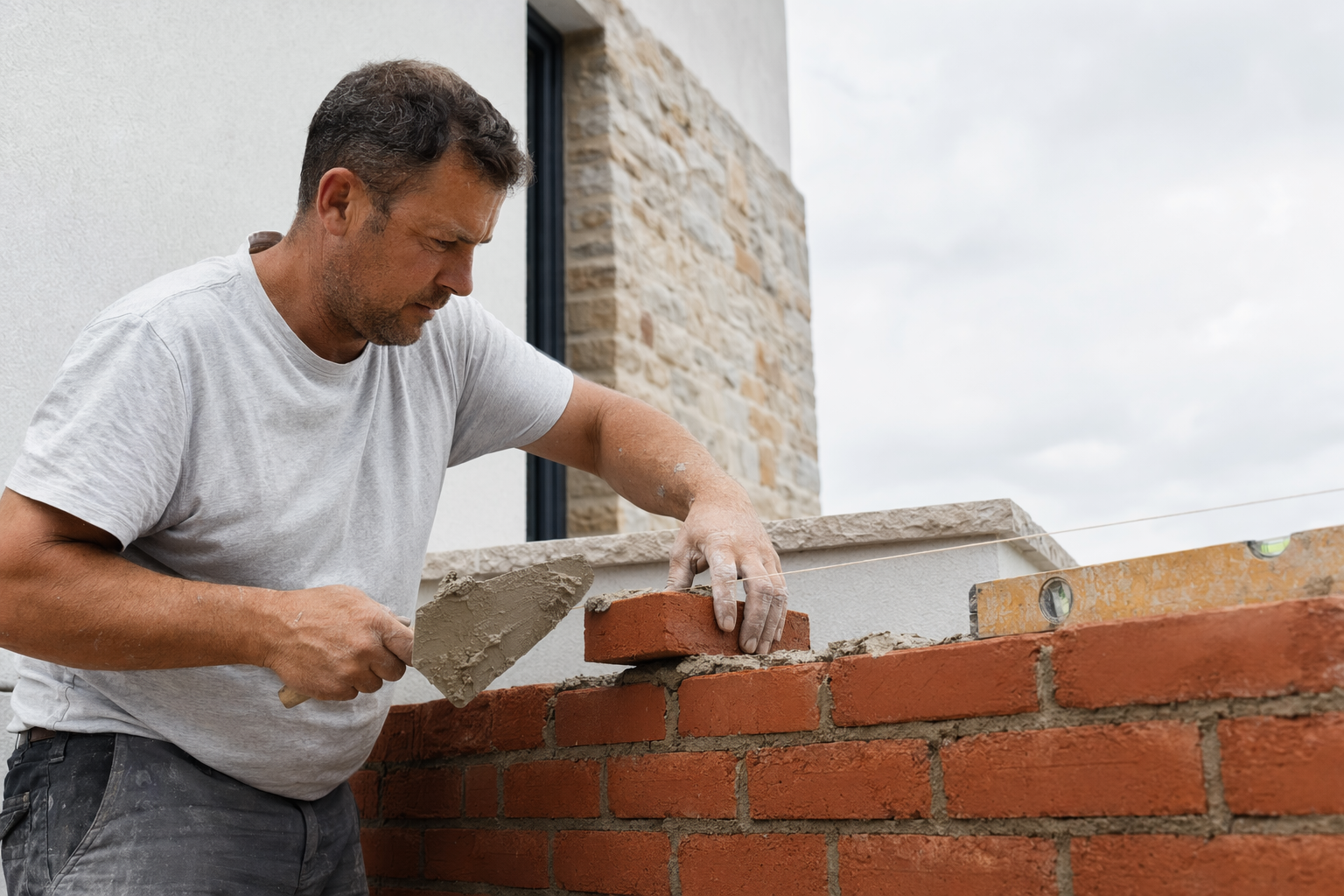
A mason builds, repairs, and rebuilds brick and block parts of your home so they stay safe, dry, and strong.
What this work involves
Brick and block masonry includes laying new brick or concrete masonry units, repairing damaged sections, and rebuilding walls that have shifted, cracked, or started to fail. On homes, that can mean brick veneer repairs, block foundation walls, chimney rebuilds, front steps, garden walls, garage walls, and some structural-looking exterior masonry that may need coordinated repair.
A mason may replace broken bricks or blocks, rebuild corners, install matching mortar joints, and repair areas where masonry is separating around doors, windows, or rooflines. Good work often includes attention to flashing, weep holes, control joints, lintels over openings, and how water moves through and away from the wall.
Some projects are mainly cosmetic, like replacing a few spalled bricks or fixing loose mortar. Others are more involved, like rebuilding a bowed block wall, correcting settlement damage, or replacing rusted steel lintels that are cracking the brick above a window or garage door. If mortar is the main problem, you may also want to learn about repointing and tuckpointing.
Because brick and block can be part of a home's envelope or support system, the right repair depends on the cause, not just the crack. Stoneform is a free service that helps homeowners understand the work and get matched with licensed, insured local masonry specialists. We do not perform masonry work or provide engineering advice.
Signs you need it
Visible damage is the most common reason homeowners start looking for brick or block masonry help. Cracked bricks, stair-step cracking in block joints, loose or missing mortar, bulging walls, and bricks that are flaking or spalling can all point to a problem that should be checked by a qualified mason.
Water signs matter too. Efflorescence, damp interior basement walls, staining under window sills, deteriorating mortar, and repeated freeze-thaw damage often mean moisture is getting into the wall. Missing weep holes, failed flashing, poor drainage, or cracked chimney crowns can all contribute to masonry damage over time.
Openings and support points deserve extra attention. If you see cracks above windows, doors, or a garage opening, the lintel may be rusting or failing. If a block retaining wall is leaning, separating, or losing soil behind it, the issue may involve drainage, pressure, or an improper rebuild. Segmental retaining-wall block systems and mortared walls each need different repair approaches.
Call for an inspection if you notice:
- Cracks that grow over time
- A wall that looks bowed, out of plumb, or separated from the house
- Bricks or blocks that are loose, soft, or breaking apart
- Mortar joints crumbling deeper than the surface
- Water leaking through a block wall or chimney
- Repeated patch repairs that do not hold
What it typically costs
Brick and block masonry costs vary a lot because access, wall height, material matching, structural conditions, and water issues all affect labor. Small repairs, like replacing a handful of damaged bricks or blocks and repointing a limited area, often fall in the few-hundred to low-thousands range. Larger rebuilds can cost much more.
Typical ranges homeowners may see are:
- Small brick or block spot repairs: about $400 to $1,500
- Rebuilding a short section of wall, steps, or a small chimney area: about $1,500 to $5,000+
- Replacing a lintel and rebuilding brick above an opening: about $2,000 to $8,000+
- Repairing or rebuilding a damaged block foundation or major wall section: often $3,000 to $15,000+
- Larger structural-looking rebuilds, long retaining walls, or extensive water-damaged masonry: can exceed these ranges
Matching old brick, custom mortar color, difficult access, scaffolding, demolition, disposal, and hidden damage can all raise the price. Cheap patching can also cost more later if the real issue is movement, drainage, or corroded steel embedded in the wall.
Stoneform does not provide quotes or guarantees, but we can help you understand typical masonry costs and get matched with local masons who can inspect the project and give their own estimates.
How to choose the right mason
Look for a mason who regularly handles the specific type of work you need. A contractor who lays new brick veneer may not be the best fit for a bowing block wall, a chimney rebuild, or a lintel replacement. Ask whether they have done similar repairs on homes like yours and whether they can explain what caused the damage.
Get clear, written details on scope. Good proposals usually describe what will be removed, what will be rebuilt, whether mortar joints will be ground out and repointed, how brick or block will be matched, and whether flashing, weep holes, caps, chimney crowns, or drainage details are included. If structural concerns are suspected, ask how they handle that and whether outside engineering input may be needed.
Before hiring, verify the basics yourself:
1. Confirm the business is properly licensed if required in your area
2. Ask for current liability insurance and workers' compensation information
3. Check local address, recent work photos, and references
4. Make sure cleanup, debris removal, and material matching are in writing
5. Be cautious with unusually low bids, pressure to act immediately, or vague repair methods
You can also review our guide to choosing a mason. Stoneform is not a contractor. We are a free matching and education service that helps you connect with vetted local masonry specialists.
Get matched, free
If you need brick or block masonry work, Stoneform can help you take the next step without the guesswork. Tell us what you are seeing, such as cracking, spalling, a leaning wall, missing mortar joints, water intrusion, or damage around a chimney, foundation, steps, or retaining wall.
We will use your project details and contact information to help match you with vetted, licensed, insured local masonry specialists when available. You can compare professional opinions, ask about repair options, and verify credentials yourself before hiring.
There is no cost to use Stoneform for matching. Start here: Get matched.