Tell us about your brick or stone problem, and we’ll help you connect with local masonry specialists for free.
Masonry in Philadelphia
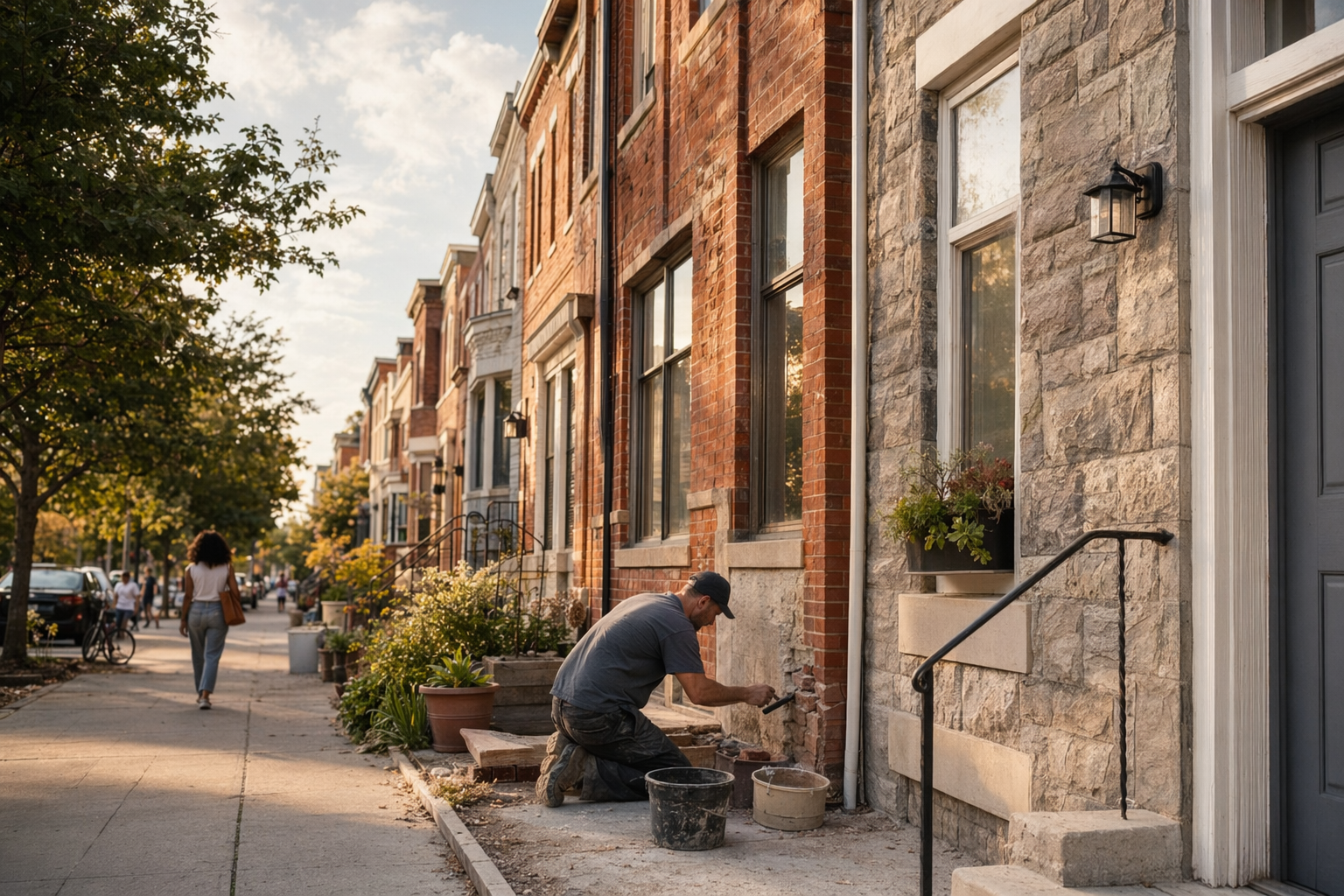
Philadelphia has a lot of older masonry. That means common issues like cracked mortar joints, spalling brick faces, leaning or separating parapet walls, chimney crown damage, basement wall moisture, and stair or retaining-wall movement. In many neighborhoods, repairs need to match older brick size, mortar color, joint profile, and the look of the original work.
A good local masonry specialist will know how to look at the full water path, not just the visible crack. That can include flashing above openings, weep holes near the base of walls, failed sealant around windows, rusting steel lintels, and roof or gutter drainage that keeps soaking the brick. On chimneys, they may check the crown, cap, flue area, and brick joints. On facades, they may look for bulging, step cracking, and loose units.
Common Philadelphia masonry projects include:
- Repointing and tuckpointing for worn mortar joints
- Brick replacement where faces are spalling or broken
- Stone step and stoop repair
- Chimney repointing, crown repair, and rebuilding
- Lintel replacement above windows and doors
- Foundation and basement masonry repair
- Retaining wall repair or rebuild using stone, brick, or segmental retaining-wall block
Because the city has so many attached homes and older walls, the right repair method matters. Using mortar that is too hard, covering trapped moisture, or skipping flashing details can make damage worse over time. Stoneform does not perform masonry work or give construction or engineering advice, but we can help you get matched with local specialists and learn what questions to ask. You can also review masonry services and read how to choose a mason before you decide.
What it typically costs
Philadelphia masonry costs depend on access, wall height, material type, how much matching is needed, and whether the problem is only cosmetic or tied to water intrusion or structural movement. Older city homes can also add labor because of tight access, scaffolding, sidewalk protection, and careful demolition around neighboring properties.
Typical ranges homeowners often see are:
- Small repointing or brick repair areas: about $800 to $3,000
- Larger facade repointing sections: about $3,000 to $12,000+
- Chimney repointing or partial rebuild: about $1,500 to $7,500+
- Chimney crown repair or replacement: about $900 to $3,500
- Lintel replacement over one opening: about $2,000 to $6,000+
- Stoop, step, or small retaining wall repair: about $1,500 to $6,000+
- Foundation or basement masonry repair: about $2,500 to $10,000+
These are typical ranges, not quotes or guarantees. Final pricing depends on what a licensed, insured mason finds on site. For example, a wall that only needs mortar-joint repair may cost much less than a wall with hidden water damage, failed flashing, loose brick backup, or widespread efflorescence from ongoing moisture. If bricks are heavily spalled or the wall is bulging, replacement or rebuilding may be needed instead of simple repointing.
When comparing bids, ask what is included. Useful details include mortar removal depth, whether damaged bricks will be replaced to match, joint finish, cleanup, debris hauling, protection of nearby surfaces, flashing or weep-hole work, and whether scaffolding is included. Our cost guides can help you understand common line items before you talk with a contractor.
Get matched, free
Stoneform is a free matching and education service for homeowners. We are not a masonry contractor, and we do not perform repairs or provide legal, structural, or engineering advice. We help you describe your project, then connect you with vetted local masonry specialists serving Philadelphia so you can compare options and choose who to hire.
You can tell us about projects like leaking brick walls, chimney repairs, repointing, stone veneer issues, damaged lintels, cracked mortar joints, stair-step cracks, loose steps, retaining walls, or white staining and moisture around masonry. If English is not your first language, we can also help you request a contractor who can communicate in your language when available.
Here’s how it works:
1. Share a few project details at Get matched
2. We look for local masonry specialists who serve your area and project type
3. You compare responses, check licensing and insurance, and decide who to contact or hire
Before hiring anyone, verify credentials yourself and ask for a written scope. It is smart to confirm license status, insurance coverage, who will actually perform the work, what materials they plan to use, and how they will protect your home during the job. If you want to prepare first, see how to choose a mason.