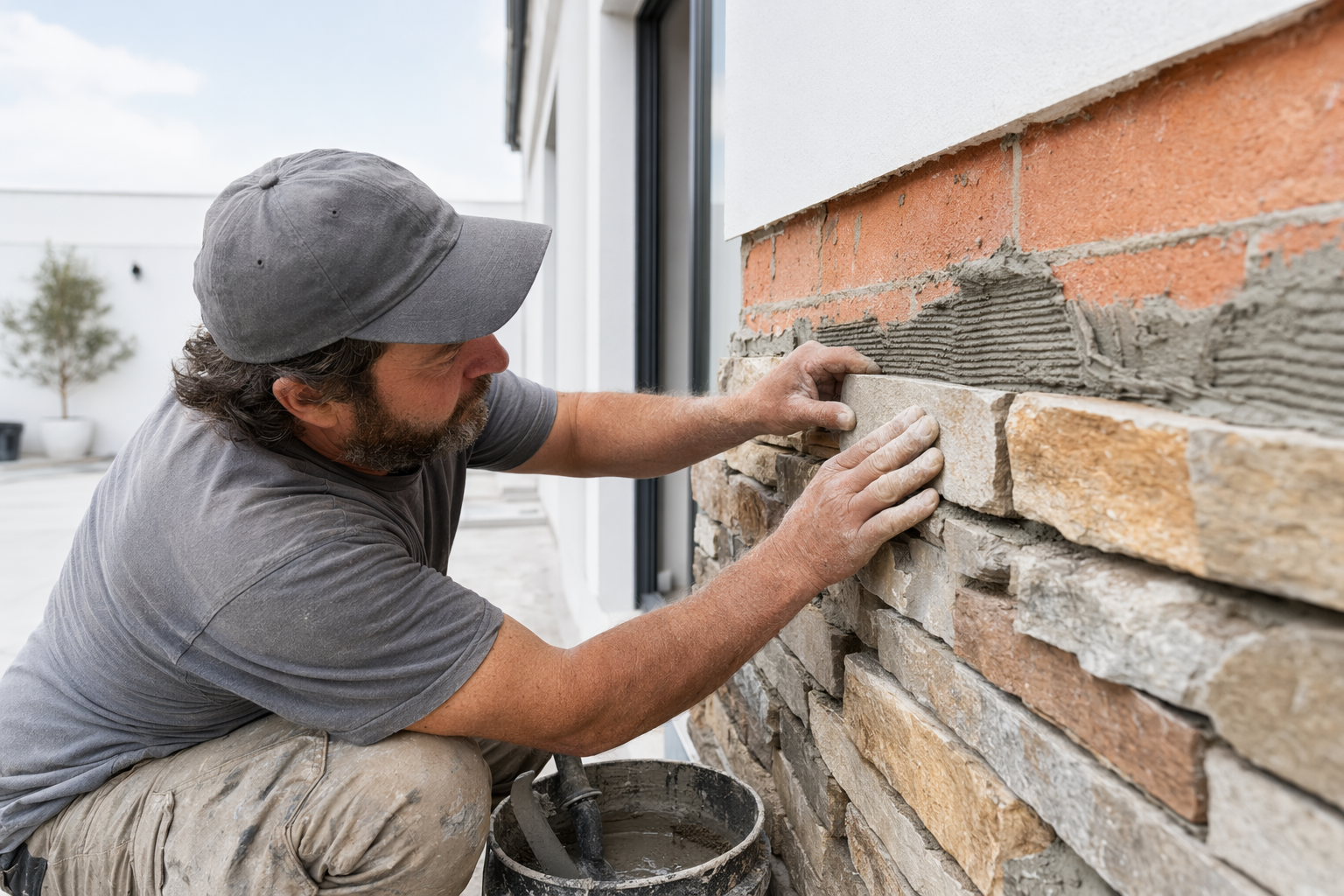
Stone veneer is a thinner layer of real or manufactured stone installed over a prepared wall surface to create the look of full stone without full-stone weight and cost.
What this work involves
Natural stone and stone veneer projects usually start with planning the layout, checking the wall condition, and choosing the right material for the location. Homeowners may be deciding between full-bed natural stone, thin natural stone veneer, or manufactured stone veneer. Each has a different look, thickness, weight, and installation method.
On exterior walls, a proper installation often includes weather-resistive barriers, metal lath or another approved backing system, flashing details, weep paths where needed, and the correct mortar for the stone and climate. The mason also plans around windows, doors, corners, trim, and transitions so the finished work looks clean and sheds water correctly. Good layout matters. So do mortar joints, control of moisture, and careful cuts around openings.
On interior projects like fireplace faces, kitchen backsplashes, and accent walls, the work may be more about substrate prep, bond strength, and appearance. Even indoors, the base surface has to be suitable for the veneer system being used. A good mason will explain whether the wall needs added support, a scratch coat, or other prep before stone goes on.
Stone veneer work is not just about appearance. It is also about durability. Poor installation can lead to loose pieces, cracking mortar joints, staining, trapped moisture, and premature failure. If you are comparing options, guides on choosing a mason and our broader masonry services overview can help you ask better questions before hiring.
Signs you need it
Sometimes homeowners are planning a new look. Other times, they are trying to fix a failing veneer or outdated facade. If you already have stone or veneer on your home, watch for pieces pulling away from the wall, cracked or missing mortar joints, bulging sections, staining below openings, or repeated leaks near the veneer. These can point to water entry, bond failure, or missing flashing details.
You may also need a mason if you see white powdery deposits called efflorescence, surface flaking known as spalling, rust stains near metal supports, or damaged areas around windows, doors, and chimney chases. These problems do not always mean the stone itself is bad. In many cases, the issue is behind the finish, such as poor drainage, trapped moisture, or movement in the wall.
For older homes, some projects involve updating a tired brick or plain wall with stone veneer for curb appeal. For newer homes, it may be about adding a front entry surround, foundation accent, outdoor kitchen face, retaining-wall feature, or interior statement wall. If the project touches nearby masonry repairs, such as failed joints or brick issues, you may also want to review repointing and tuckpointing.
If you are not sure whether you need replacement, repair, or a fresh installation, a qualified local mason can inspect the visible conditions and explain the options. Stoneform can help you get matched with pros, but homeowners should always verify licenses, insurance, and experience themselves.
What it typically costs
Stone and stone veneer costs vary a lot based on material, wall size, prep work, access, and detail level. Typical installed ranges for manufactured stone veneer often run about $15 to $35 per square foot. Thin natural stone veneer often falls around $20 to $45 per square foot. Full-bed natural stone can be much higher because of added labor, support needs, and material cost.
Small accent-wall or fireplace projects may still have a minimum job charge, so the per-square-foot number can look higher on smaller jobs. Exterior facades with many corners, window returns, arches, sills, and cut pieces also cost more. If the wall needs repair first, or if there are moisture issues, damaged sheathing, failed flashing, or substrate problems, total cost can increase significantly.
Other factors that can affect price include:
- natural stone type and availability
- manufactured veneer brand and profile
- demolition and removal of existing finishes
- scaffolding or difficult access
- custom patterns, dry-stack looks, or tight mortar-joint tolerances
- sealing, cleanup, and matching adjacent materials
These are typical US ranges, not quotes or guarantees. A licensed, insured mason should look at the actual site conditions before giving pricing. You can also explore broader masonry cost information to understand how labor, repair needs, and project size affect the final number.
How to choose the right mason
Stone veneer looks simple when it is done well, but the details matter. Ask whether the mason has recent experience with the exact system you want: thin natural stone, manufactured veneer, full-bed stone, exterior facade work, or interior accent walls. Request photos of similar projects, especially around corners, window openings, transitions, and mortar-joint finishing.
You should also ask how they handle water management on exterior jobs. A reliable mason should be able to explain basics like substrate prep, flashing at openings, drainage details, weep paths where appropriate, and how they prevent moisture from getting trapped behind the veneer. If a proposal skips prep details and only talks about surface appearance, that is a reason to ask more questions.
Use a simple checklist:
1. Confirm they are licensed if your state or local area requires it.
2. Verify current liability insurance and any required workers' compensation coverage.
3. Ask who performs the work and whether crews regularly install stone veneer.
4. Get a written scope covering prep, materials, pattern, mortar-joint style, cleanup, and repair of disturbed areas.
5. Ask how they address cracks, loose substrate, flashing problems, or hidden damage if discovered.
Stoneform is a free matching and education service, not a contractor. We do not perform masonry work or give construction, structural, engineering, or legal advice. We help homeowners connect with local masonry specialists and understand what questions to ask. Before you hire anyone, review how to choose a mason and verify credentials yourself.
Get matched, free
If you are planning a stone facade, repairing failing veneer, or comparing natural stone with manufactured options, Stoneform can help you take the next step. Tell us a little about the project, where the work is located, and how to reach you. We will use that information to help match you with vetted local masonry specialists in your area.
There is no charge to use Stoneform. We are here to make masonry work easier to understand for US homeowners, including first-time owners, new immigrants, and anyone who prefers plain English. You can start with get matched or browse other masonry services if you are still comparing project types.
When you speak with a mason, share photos if you have them and describe whether the project is exterior or interior, new installation or repair, and whether you have seen issues like cracking, leaks, loose stone, efflorescence, or spalling. That helps the right pro understand the job before a site visit.