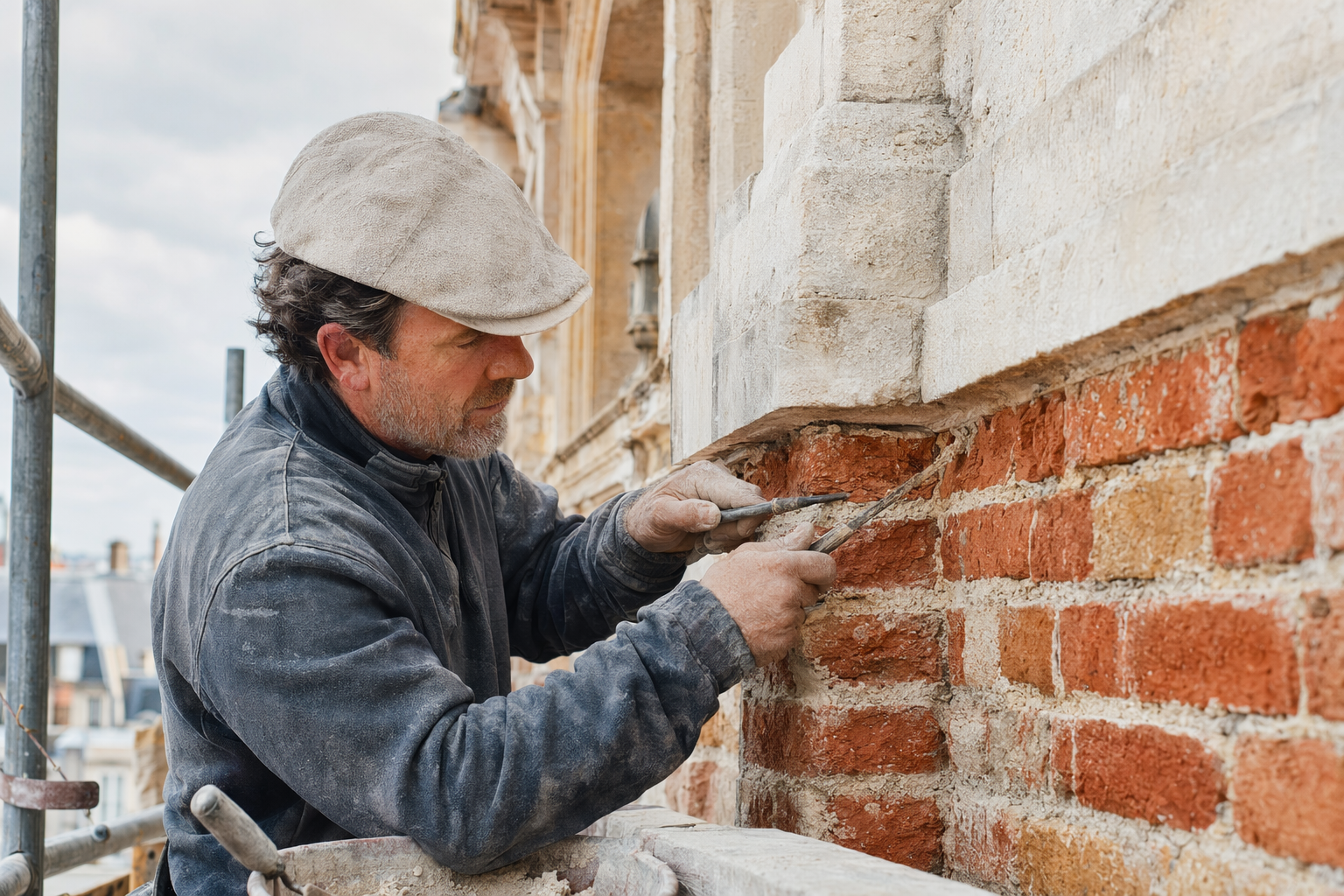
It means repairing old masonry carefully so it stays sound and still looks like itself.
What this work involves
Masonry restoration is more than patching cracks with new mortar. The goal is to stabilize aging brick or stone, manage water, and preserve the original look as much as possible. On older homes and historic buildings, that often means matching mortar color, joint profile, brick size, stone texture, and the overall character of the wall or chimney.
Common restoration work includes repointing failing mortar joints, replacing badly spalled brick, resetting loose stone, rebuilding damaged chimney tops, repairing chimney crowns, and correcting drainage details like flashing or weep holes. Some projects also involve cleaning masonry to remove dirt, biological growth, or light efflorescence without damaging the face of the brick or stone.
A careful mason will usually look at why the damage happened in the first place. Water is often the real problem. Failed mortar, hard modern patch materials, missing flashing, cracked crowns, rusting lintels, and trapped moisture can all push a wall from cosmetic wear into structural deterioration.
If you are not sure whether you need restoration, start with related services like repointing and tuckpointing or browse other masonry services. The right scope depends on the age of the building, the masonry type, and how much original material can realistically be saved.
Signs you need it
Some warning signs are easy to spot from the ground. Mortar joints may be crumbling, cracked, recessed, or falling out. Brick faces may be flaking or popping off, which is called spalling. Stone may be loose, cracked, or shifting. You might also see white powdery staining called efflorescence, which often points to ongoing moisture movement through the wall.
Look closely around chimneys, window and door openings, and retaining walls. Rust stains near steel lintels, stair-step cracks in mortar joints, bulging wall sections, separated chimney bricks, and missing cap or crown material are all signs that the masonry may need more than a simple cosmetic touch-up. On older homes, mismatched hard mortar from past repairs can also damage softer historic brick.
Inside the home, masonry problems can show up as water stains, damp basement walls, musty smells, peeling paint near brick surfaces, or drafts around old openings. Exterior clues like failed caulk, clogged weep holes, and damaged flashing can let water enter and keep masonry wet longer than it should.
If the wall is leaning, the chimney is pulling away from the house, or pieces are actively falling, treat that as urgent. Stoneform does not provide engineering or construction advice, but we can help you get matched with a licensed, insured mason for an on-site evaluation.
What it typically costs
Costs vary a lot because restoration is detail-heavy work. Access, height, mortar matching, unit replacement, water-damage extent, and whether the building is historic all affect price. Small restoration jobs may run a few hundred to a few thousand dollars, while larger projects involving multiple walls, a full chimney rebuild above the roofline, or extensive brick replacement can cost several thousand to tens of thousands.
Typical ranges homeowners often see include:
- Minor mortar repair or small-area repointing: about $500 to $2,500
- Larger repointing sections or selective brick replacement: about $2,000 to $8,000+
- Chimney restoration, depending on crown, flashing, brick condition, and height: about $1,500 to $10,000+
- Masonry cleaning or stain removal on limited areas: often a few hundred to a few thousand dollars
- Historic or highly detailed restoration with custom mortar matching and specialty brick or stone sourcing: often priced higher than standard repair work
Very low bids can be risky on restoration work. Aggressive grinding, sandblasting, pressure washing, incorrect mortar hardness, and surface-only patching can make old masonry look better briefly but shorten its life. A good proposal should explain what is being repaired, what materials are being matched, and whether underlying moisture issues are being addressed.
For broader price context, visit masonry costs. These are typical ranges only, not quotes or guarantees.
How to choose the right mason
Restoration work is not the same as new masonry installation. Ask whether the mason has hands-on experience with older brick, natural stone, lime-based or softer mortar systems, chimney restoration, and matching existing materials. Before-and-after photos of similar homes can be helpful, especially if your property has aged brick, decorative joints, or visible weathering.
A strong candidate should be willing to explain:
1. What is failing and why
2. Which materials they plan to use
3. How they will match mortar color, texture, and joint profile
4. Whether any brick or stone needs replacement rather than patching
5. How they will protect nearby surfaces and clean up after the work
Make sure you verify that the mason is properly licensed and insured for your area. Ask for a written scope of work and read it carefully. It should be clear about repointing depth, unit replacement, cleaning methods, flashing or water-management details, and whether work includes related items like crown repair or lintel attention. If your home is older, ask specifically whether the proposed mortar is appropriate for historic masonry.
You can also review our guide to choosing a mason. Stoneform is not a contractor, but we help homeowners connect with vetted local pros and understand what to ask before signing anything.
Get matched, free
If your brick or stone is aging, leaking, cracking, or losing mortar, Stoneform can help you take the next step. Tell us about the project, the type of masonry you have, and what you are seeing. Photos are helpful if you have them, especially close-ups of mortar joints, spalling, chimney areas, flashing, or any bulging sections.
We will use your project details to help match you with vetted local masonry specialists. Stoneform is a free homeowner education and matching service. We do not perform masonry work, and we do not give structural, engineering, or legal advice.
Before hiring anyone, verify licenses, insurance, and the scope of work yourself. Ready to get started? Get matched.