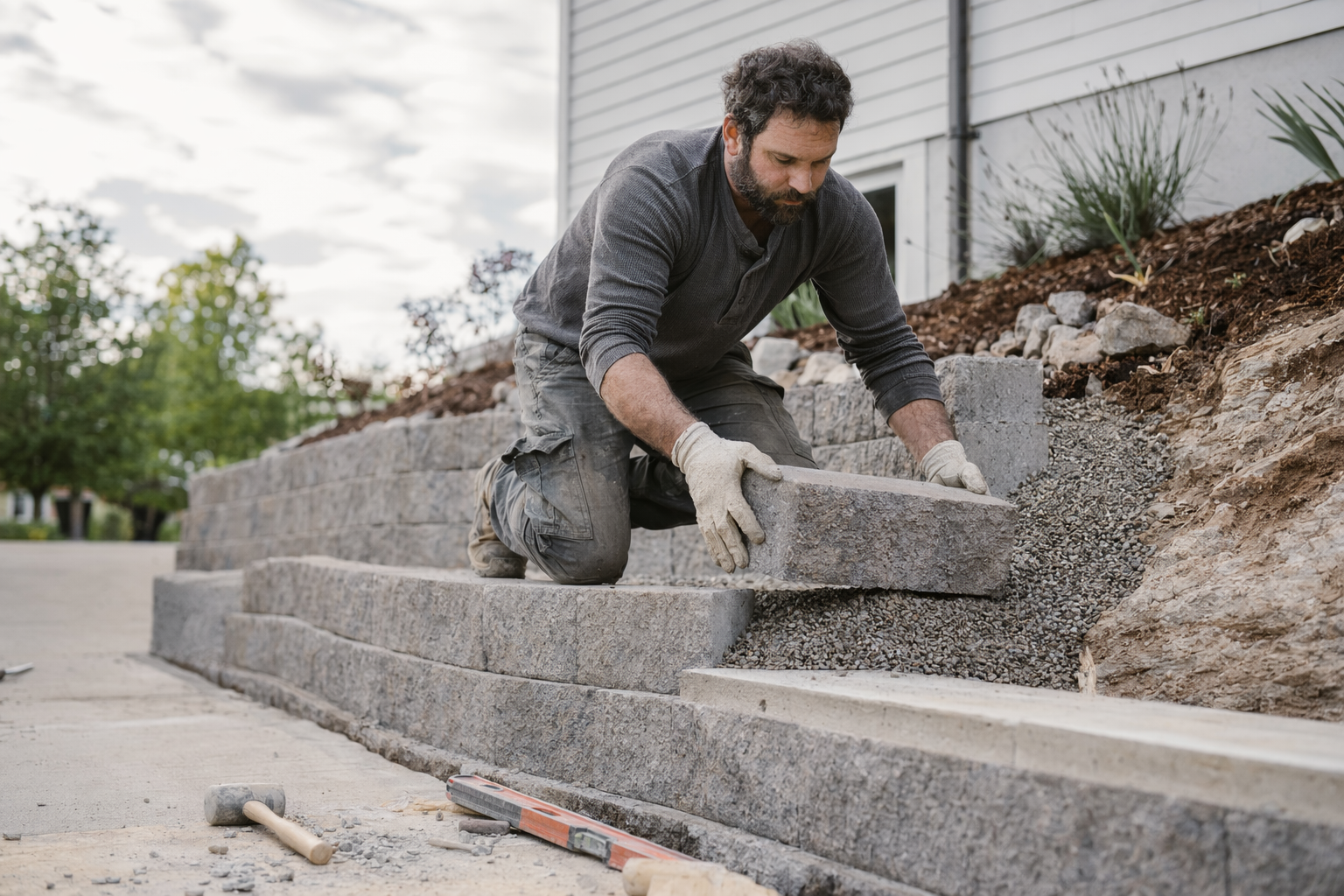
A retaining wall keeps dirt from sliding and helps shape your yard safely.
What this work involves
Retaining wall work usually means building a wall that resists the pressure of soil behind it. In residential projects, that may be a small garden wall, a taller wall along a driveway, or a tiered setup that turns a steep slope into flatter, more usable areas. Common materials include segmental retaining-wall block, natural stone, concrete block with veneer, and poured concrete, depending on the site and design.
A good retaining wall is not just a stack of blocks. It usually needs proper base preparation, compacted fill, gravel backfill, drainage stone, and a way for water to escape so pressure does not build up behind the wall. Depending on the wall type, a mason may also coordinate geogrid reinforcement, caps, steps, corner units, and transitions to walkways, patios, or services.
Drainage is one of the biggest parts of the job. Many wall failures start when water gets trapped behind the wall. A qualified pro will look at grading, downspouts, runoff patterns, and whether the wall needs perforated drain pipe, outlets, or weep-style drainage paths. If the wall is near a house, garage, fence, or public sidewalk, the layout matters even more.
Height, location, and local rules can affect permits and design requirements. Stoneform does not design walls or give engineering advice, but we can help you understand the scope and get matched with a local masonry specialist who can inspect the site, explain options, and tell you what licensing, insurance, permits, or engineering may be needed.
Signs you need it
You may need a retaining wall if soil is washing downhill, a slope is making part of your yard unusable, or you are seeing erosion after heavy rain. Some homeowners add walls to flatten a backyard, support a planting bed, protect a driveway edge, or create a level area for steps, hardscaping, or outdoor living.
If you already have a retaining wall, watch for signs of movement or water problems. These can include bulging, leaning, separated caps, open joints, cracked units, displaced stone, soil leaking through the face, puddling at the base, or sinking areas nearby. White staining can be efflorescence, which often points to moisture moving through masonry. Spalling, where the face starts flaking or breaking apart, can happen after repeated wet and freeze-thaw cycles.
Other warning signs are less obvious. Water flowing over the top of the wall, clogged drainage, missing outlet points, and tree roots pushing on the wall can all shorten its life. If the wall supports a driveway, walkway, fence, or structure, do not ignore changes. Problems near stairs, railings, or property lines can become more complicated and may require faster attention.
In short, it is smart to get a professional opinion when the wall is moving, cracking, or trapping water, or when you want to build a new wall on a noticeable slope. If you are not sure what kind of masonry help you need, start with get matched and we can help point you in the right direction.
What it typically costs
Retaining wall costs vary a lot because price depends on wall height, length, access to the yard, soil conditions, material choice, drainage needs, demolition, and whether permits or engineering are required. Small decorative or low garden walls may cost much less than a taller wall that must hold back significant soil and include reinforcement.
Typical residential ranges often look like this:
- Small, lower-height segmental block or stone garden walls: about $2,000 to $6,000+
- Mid-size retaining walls with excavation, base prep, and drainage: about $6,000 to $15,000+
- Larger, taller, or tiered walls, or walls with difficult access, reinforcement, steps, or major grading: about $15,000 to $40,000+
Repairs can also vary. Rebuilding a failed section may be more common than a simple patch, especially if drainage or base preparation was wrong the first time. Minor reset work or drainage corrections may be a few thousand dollars, while partial or full replacement can cost much more. Cleanup, hauling away old material, and machine access can meaningfully affect the final number.
These are typical ranges, not quotes or guarantees. A licensed, insured mason should inspect the site in person and explain what is driving cost. For broader pricing help, see costs.
How to choose the right mason
Retaining walls are one of those jobs where installation details really matter. Ask whether the contractor regularly builds retaining walls, not just patios or general landscape features. You want someone who understands base depth, compaction, setback, drainage, wall batter, and the specific requirements of the wall system being installed.
A strong screening checklist is:
1. Confirm they are licensed and insured for this type of work in your area.
2. Ask what wall materials they recommend and why.
3. Ask how they handle drainage behind the wall.
4. Ask who obtains permits if needed.
5. Ask whether taller walls may need engineering or special approvals.
6. Ask for a written scope covering excavation, base, backfill, drainage, caps, cleanup, and warranty terms.
It also helps to ask about site-specific issues. For example: Will runoff from downspouts affect the wall? Will they use segmental retaining-wall block rated for this application? How will they protect nearby walkways, fences, or driveways? If natural stone is proposed, ask how the wall will be built and drained so it is not just a surface look with hidden structural problems.
Stoneform is not a contractor and does not perform or supervise the work. We are a free service that helps homeowners learn what to ask and connect with local masonry specialists. You can also read how to choose a mason before you hire anyone.
Get matched, free
If you are planning a new retaining wall or worried about an existing one, Stoneform can help you take the next step. Tell us a little about the wall, your yard slope, approximate size, material if known, and what problems you are seeing, such as leaning, cracking, drainage issues, or erosion.
We will use that information to help match you with vetted local masonry specialists for your project area. Stoneform is free to homeowners. We do not collect financial details, ID numbers, or immigration information. We focus only on your project details and contact information so a local pro can follow up.
Before hiring, always verify licensing, insurance, and permit requirements yourself. A local mason who sees the site in person can explain your options, typical timeline, and whether the project needs added design or engineering review.
Ready to start? Visit get matched for free.